Mountain bike lessons with Jamie in Rotorua
Lessons are really popular with people who are looking to build confidence and improve skills to enjoy riding your bike instead of that feeling that you are being taken for…
Share this with your friends
Summary: What you wear mountain biking is a genuine safety consideration, not just a style choice. This post covers the clothing and protective equipment NZMTB recommends, from the mandatory to the strongly advisable, and our partnership with POC, whose gear we use and recommend across guided rides and coaching sessions.
























Mountain biking is an outdoor activity that takes place in changing conditions on natural terrain. What you wear affects not just your comfort, but how your body handles a fall, how long you stay warm in a cold rain shower, and whether a branch across a trail leaves a scratch or a trip to the emergency department.
We talk about risk management a lot at NZMTB — you can read our full approach to risk on our Risk Disclosure page — and clothing and protective gear sit firmly inside that conversation. Our guides carry first aid kits and know how to use them. But the best outcome is never needing them. Good gear helps.
Here is what we think about when we consider what to wear on the trails.
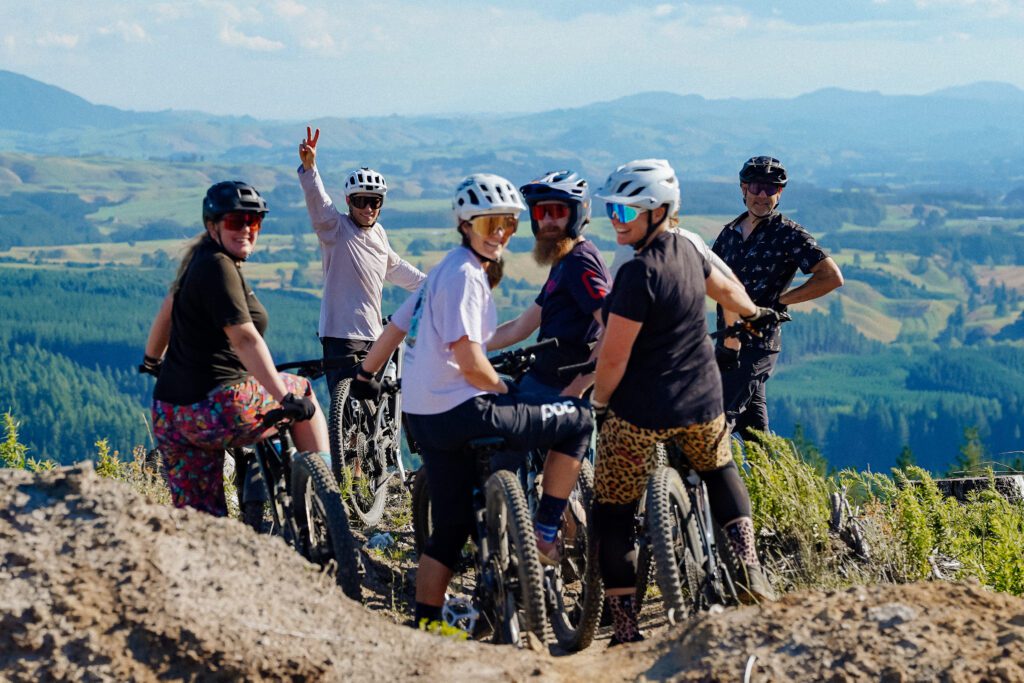
A helmet is not optional on an NZMTB trip. It is the one piece of equipment we will not ride without, and we ask that you bring one or hire one before you join us.
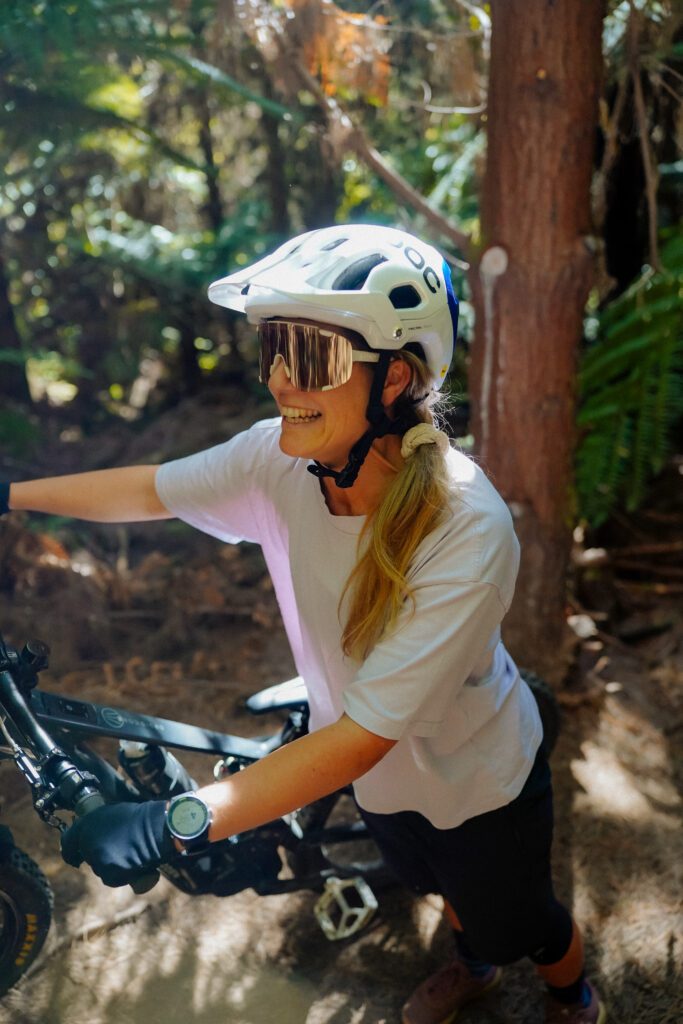
Not all helmets are equal for mountain biking. A road cycling helmet or a skate helmet is better than nothing, but it is not designed for the kind of impact that happens when you go over the bars on a rooted descent or clip a tree at speed. A trail mountain bike helmet — with more coverage around the back of the head and sides — is the right tool for the job.
For riders heading into technical terrain, a full-face helmet adds significant protection for the face and chin in a forward impact. We are a POC partner, and their range covers everything from lightweight open-face trail helmets through to full-face enduro options. POC helmets carry MIPS technology as standard across most of their MTB range, which reduces rotational forces on the brain in an angled impact — the kind that happens most often in mountain biking falls.
If you are not sure what level of helmet suits the riding you are planning, ask us when you book. We would rather have that conversation early than be trying to find you a replacement at the trailhead.
Beyond the helmet, there is a range of protective equipment that can make a real difference — especially for riders new to the sport, those stepping up to more technical terrain, or anyone who just prefers to ride with more confidence.
Knee and shin pads are probably the most common protective addition after a helmet. The knees are exposed on a bike and tend to take the brunt of slow-speed trail contact — clip a pedal, brush a rock, or dab a foot incorrectly and you will know about it quickly. A well-fitting knee and shin pad does not restrict riding and takes away a lot of the sting. POC’s Joint VPD Air range is what several of our guides ride in — low profile, breathable, and they stay put on the leg without sliding.
Elbow pads are worth considering for riders going into steeper or more exposed terrain. Falls on steep descents often involve shoulder or elbow contact with the trail, and a fractured elbow is a long recovery.
Back and spine protection is more common than it used to be, particularly at the enduro end of the sport. For guided and coached sessions on technical terrain, we think it is worth discussing. POC’s spine protection integrates cleanly into a hydration pack or riding jersey if you prefer not to wear a separate vest.
Gloves protect your palms in a fall, give you better feel and grip on the bars, and reduce fatigue on longer rides. They are one of those items that riders who start without them rarely want to go back to riding without.
New Zealand weather does not always cooperate. Rotorua’s Redwoods can go from warm and dry to cold and wet in a single afternoon, and some of the more remote terrain we ride in is genuinely exposed.
The principle is layering. A base layer, a mid layer, and a waterproof outer shell give you the flexibility to manage temperature as conditions and your effort level change across a day. Cotton kills — it stays wet and cold against your skin. Wool or synthetic base layers manage moisture properly.
For a half-day coaching session in summer, you can probably get away with a trail jersey and some decent shorts. For a multi-day tour, you need to think about a full range of conditions.
We ask every participant to bring a warm layer and a waterproof layer on every trip. This is not a suggestion — it is part of how we manage risk in an environment where the weather can change without much warning.
Footwear matters too. Flat-soled shoes with grip give you good contact with the pedals and still allow you to put a foot down naturally. Clipless systems have their place, but for guided and coached rides with mixed ability groups, flat pedals and grippy shoes give you more control and confidence in tricky moments.
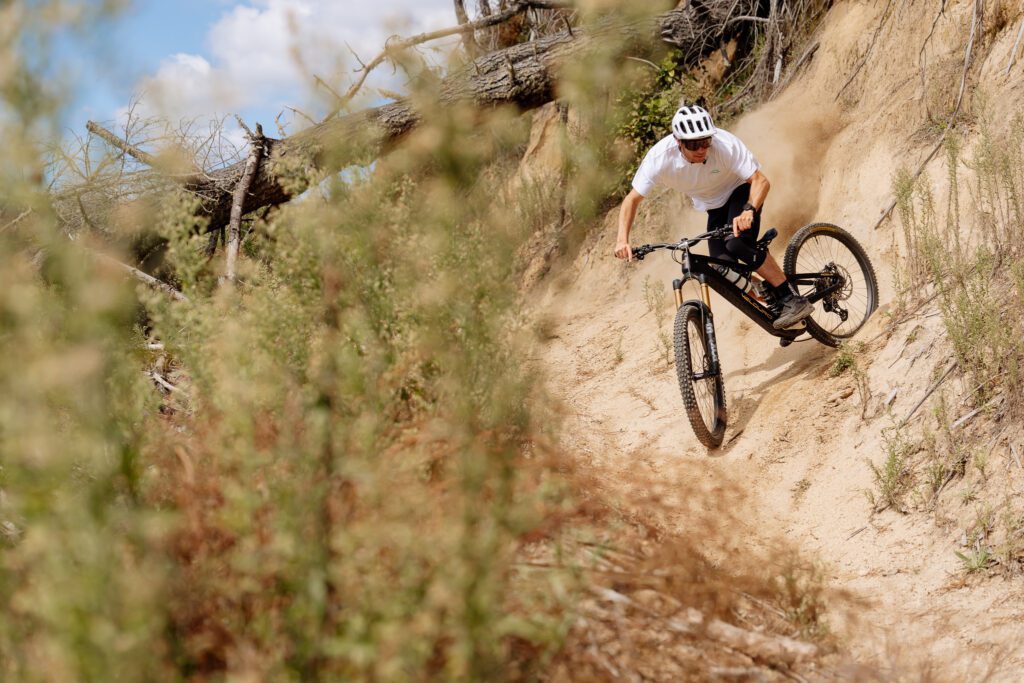
POC is a Swedish brand that started in skiing and has built one of the most respected protective gear ranges in mountain biking. Their design philosophy centres on protection that actually gets worn — gear that is comfortable and well-fitted enough that riders do not leave it in the car.
That matters to us. The best knee pad in the world is irrelevant if it is sitting on the back seat. POC gear gets worn because it is well-made and does not get in the way of the riding.
We use and recommend POC across helmets, pads, eyewear, and gloves for our guides and coaching clients. If you are looking to invest in protective equipment before a trip or a coaching session with us, their range is a good place to start.
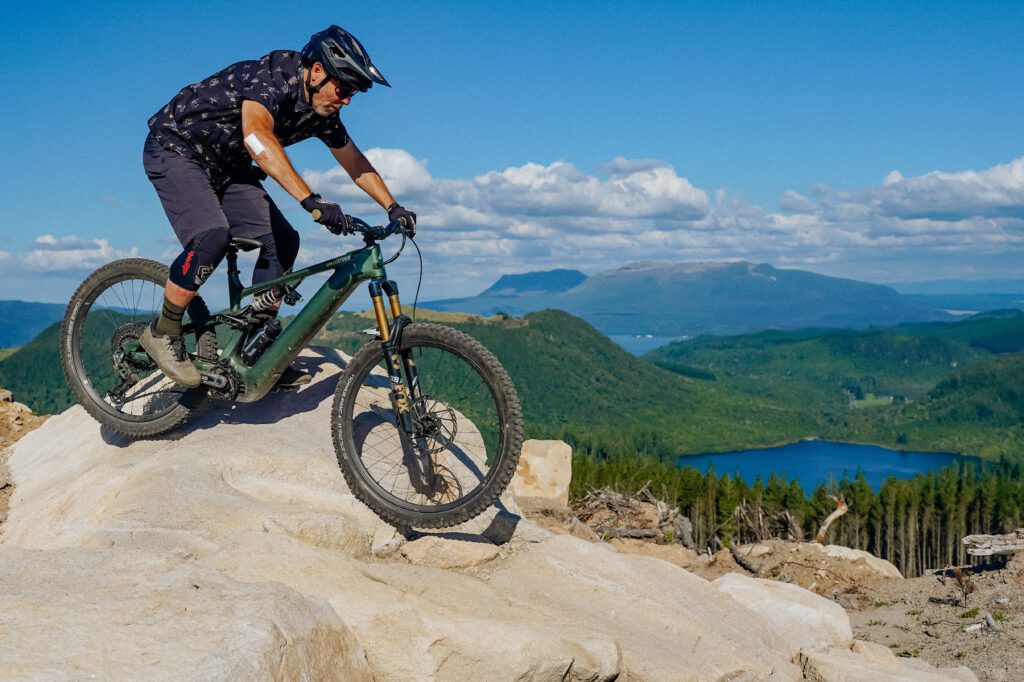
Do I have to wear a helmet on an NZMTB trip?
Yes. A helmet is mandatory on every guided ride and coaching session we run. If you do not have one, we can arrange a hire helmet before the trip — just let us know in advance.
What kind of helmet do I need?
For most trail riding and coaching sessions, a quality open-face trail helmet with good rear and side coverage is appropriate. For technical descents or riders who prefer more protection, a full-face helmet is a solid choice. If you are unsure, ask us when you book and we can point you in the right direction.
Are knee pads required?
They are not mandatory, but we strongly recommend them, particularly for beginner and intermediate riders, anyone stepping onto more technical terrain, or riders who have not been on a bike recently. The trails we ride are real trails with roots, rocks, and natural features. Knee and shin contact with the ground is one of the more common outcomes of a low-speed fall.
I do not own any protective gear. Can I still book?
Yes. Reach out before your session and we can discuss hire options and what to look for if you want to invest in your own kit.
Does what I wear really make a difference to safety?
It does. A good helmet, appropriate layers for the weather, and fitted pads do not prevent crashes, but they significantly change the outcome of one. Clothing that is too loose and baggy can get caught on your bike, causing you to crash. Clothing also affects how long you can safely stay out. A rider who is cold, wet, and underdressed is a more fatigued, less focused rider. That matters on the trail.
What should I wear if I have never mountain biked before?
Start with a properly fitted helmet, comfortable athletic clothing you can move in but are not overly baggy. Loose is ok, too baggy and clothing can get hooked and caught up on your bike. And closed-toe shoes with a flat sole and reasonable grip are great. Bring a warm layer and a waterproof jacket regardless of the forecast. If you want guidance on anything beyond that, we are happy to talk it through before you arrive.
Clothing and protective gear are one part of how we manage risk on the trails. The other parts — trail selection, guide experience, continuous on-trail assessment, and the shared responsibility between riders and guides — are covered in detail on our Risk Disclosure page.
If you are planning a trip with us and you are not sure what gear to bring or hire, get in touch. We would rather answer a gear question before the ride than deal with a preventable incident on the trail.
By Jamie Garrod, founder of New Zealand Mountain Biking
At New Zealand Mountain Biking, we run epic mountain biking tours across the scenic North Island, New Zealand. We also help riders build confidence and skills in our MTB and eMTB private lessons on the legendary Rotorua trails. If you race or you want to get into some racing and you want to improve those skills, get in touch for some lessons!
You can learn more about our trips here to book your ride today to ride the best trails in New Zealand.